
Partners from five Mediterranean countries met in Kozani (Western Macedonia), Greece, to launch the project and set a shared roadmap for transforming school food environments. 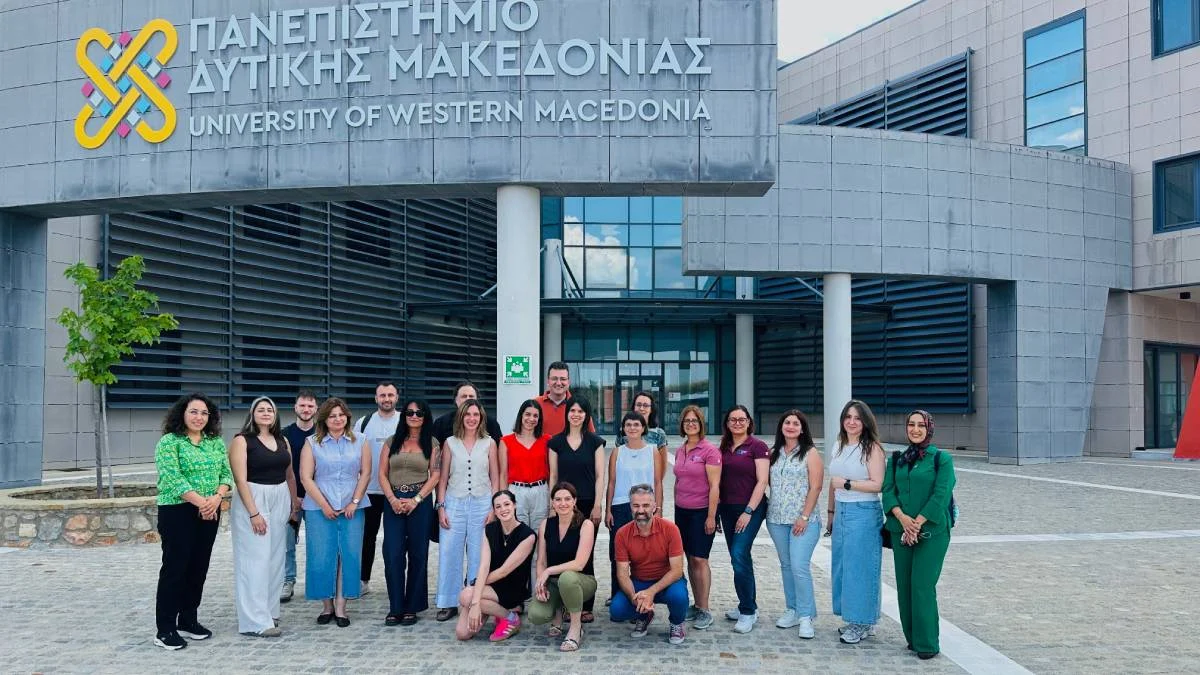
On 8 and 9 July, the SchoolMedDiet consortium gathered in Kozani, Greece, for the official kick-off meeting of SchoolMedDiet – Co-creating Living Labs to bring the Mediterranean Diet back to schools. Funded by the PRIMA Programme and coordinated by the University of Western Macedonia, the project brings together 10 partners from five Mediterranean countries: Greece, France, Malta, Morocco and Tunisia.
The two-day meeting marked the start of a three-year journey to transform school food environments across the Mediterranean, combining research, education and innovation to reconnect young people with one of the region’s richest cultural and nutritional traditions.
Day 1: Building a shared vision
The first day was dedicated to getting to know one another. Each partner organisation presented its work and expertise, and the consortium then walked through the project’s Work Packages in detail. By the end of the day, partners had agreed on a common vision and a clear roadmap for the months ahead.
Day 2: From the classroom to the field
The second day combined informative presentations with hands-on experiences in the field. Participants visited the Centre for Education for the Environment and Sustainability (KEPEA) in Velventos, where the Head of the Centre, Nikos Tzioukardanis, presented its educational programmes. He explained how local products such as wheat, peaches and grapes are used to connect environmental education with the region’s agricultural heritage.
Evangelia Triantafyllou, representing the Regional Directorate of Primary and Secondary Education of Western Macedonia, then gave an overview of the Greek educational system. Her presentation covered school meal practices, canteen regulations, and recent data on nutrition and obesity among Greek children and adolescents, offering valuable context for the work ahead.
The day continued with visits to three local production sites:
- A traditional watermill, where participants followed the journey from grain to flour to freshly baked bread.
- The ASEPOP Agricultural Cooperative, where locally grown peaches are processed and packaged for domestic and international markets.
- The Vogiatzis winery, where partners learned about local grape cultivation, wine production and the promotion of regional products abroad.
These visits were a vivid reminder of what SchoolMedDiet is all about: showing how environmental education, healthy nutrition, local culture and sustainable development can come together in authentic learning experiences for students.
What comes next
The consortium left Kozani energised and inspired. Over the coming months, partners will work to establish four national Living Labs in Greece, Malta, Morocco and Tunisia, develop AI- and VR-powered educational tools, and bring the Mediterranean Diet back to the heart of school life.
This is just the beginning. Follow our news page and social media channels to stay up to date as the project unfolds.
About the consortium
SchoolMedDiet is coordinated by the University of Western Macedonia (Greece). See the rest of the consortium here.